
Learn how to create a digital boost, close tech skills gaps, and train employees with confidence using 5 proven tips and applied digital skills.
How to Create a Digital Boost Through Continuous Learning.
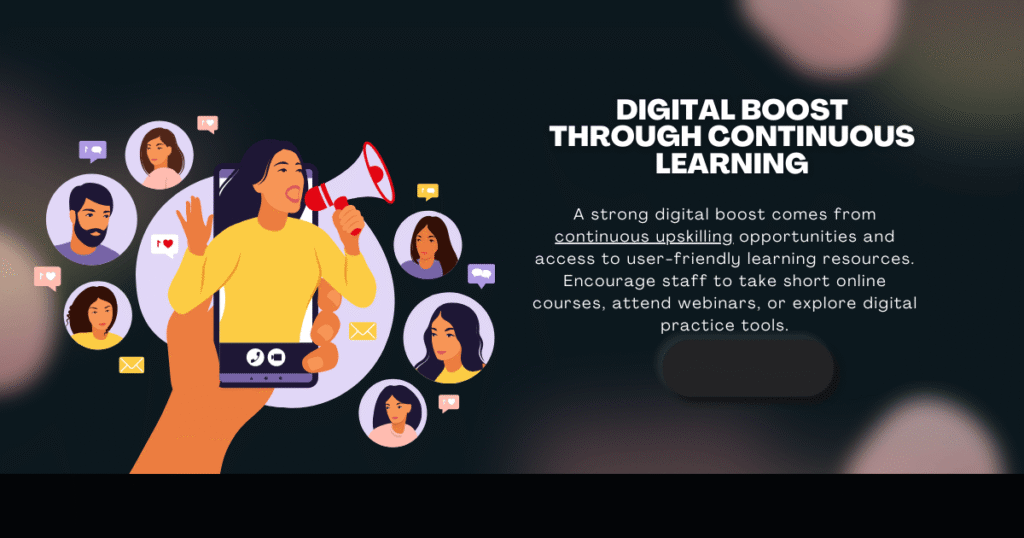
A strong digital boost comes from continuous upskilling opportunities and access to user-friendly learning resources. Encourage staff to take short online courses, attend webinars, or explore digital practice tools. Organizations that prioritize upskilling see higher morale and improved innovation. Small learning steps can lead to big leaps in digital confidence and efficiency.
5 Top Tips to Boost Your Workforce’s
1. Create a Supportive Learning Culture
The foundation of digital confidence starts with company culture. A workplace that encourages continuous learning instead of punishing mistakes inspires employees to explore new technologies fearlessly. Encourage experimentation. Offer workshops, webinars, and internal learning hubs where employees can safely practice digital tools without fear of failure.
👉 Example:
A weekly “Tech Hour” can allow employees to test out new apps or share digital tips with teammates.
2. Offer Hands-On Digital Training.
Let’s face it, no one gains confidence by watching a long slideshow. Real confidence comes from hands-on experience. Design training sessions where employees actively use digital tools, such as project management platforms (e.g., Trello, Asana) or AI writing assistants. Focus on real-world tasks, like creating digital reports or managing online communication systems. Partnering with digital education providers (like DigiSkills Pakistan or Coursera) can help employees learn at their own pace.
3. Empower Employees with the Right Tools
You can’t expect digital confidence without providing user-friendly, modern tools. Outdated systems frustrate employees and lower motivation. Invest in intuitive software that simplifies their work instead of complicating it. For instance, tools like Slack, Google Workspace, and Microsoft Teams enhance collaboration while keeping workflows smooth.
🧠 Tip:
Always involve employees in choosing new digital tools. Their input ensures better adoption and engagement.
4. Encourage Peer Support and Collaboration
Digital learning doesn’t have to be a solo journey. Encourage employees to learn together. Pair less confident users with tech-savvy peers for informal mentorship. Team-based projects also help people build trust and share knowledge organically. Platforms like Notion or Miro can promote interactive teamwork while improving digital familiarity. When people teach or assist others, they strengthen their own understanding a win-win for the whole organization.
5. Celebrate Progress and Digital Achievements
Recognition fuels motivation. When employees master a new digital skill or successfully automate a task, celebrate it! Highlight digital success stories in team meetings, newsletters, or social channels. Even small achievements like learning to use a new CRM tool deserve appreciation.
🎉 Example:
Introduce a “Digital Star of the Month” award to acknowledge employees making strides in digital learning. Over time, these celebrations reinforce a growth mindset and show that digital transformation is a shared journey, not a forced obligation.
What do you know about the top 10 basic digital skills?
Additional Strategies for Sustained Digital Growth
- Encourage microlearning: Short, bite-sized lessons make digital topics easier to grasp.
- Promote leadership involvement: When leaders champion digital upskilling, employees follow their lead.
- Create internal digital ambassadors: Assign tech enthusiasts to help others adopt new tools smoothly.
These actions build consistency and sustain momentum long-term.
Common Challenges and How to Overcome Them
1. Fear of Failure
Many employees fear making mistakes with technology. To counter this, build a “fail-safe” culture where experimentation is welcomed, not judged.
2. Generational Gaps
Older employees may find adapting harder. Offer specialized sessions for different skill levels and use patient, step-by-step guidance.
3. Overwhelming Tech Choices
Too many digital tools can confuse staff. Standardize your tech stack and provide clear usage guidelines.
The Future of Digital Confidence
The future belongs to those who can learn, adapt, and evolve digitally. With the rise of AI, automation, and hybrid work, employees must be ready to collaborate with intelligent systems, not compete with them. By 2030, digital confidence will be one of the top ten essential digital skills, according to global reports. Companies that invest in digital learning today will lead tomorrow’s innovation.
Conclusion.
Building digital confidence isn’t just about technology; it’s about people. Empower your workforce with knowledge, support, and encouragement, and you’ll see higher engagement, innovation, and productivity. Remember, every confident click, every curious question, and every new skill learned adds up to a future-ready, tech-savvy workforce.
FAQs.
1. What is digital confidence in the workplace?
Digital confidence is the ability of employees to comfortably use technology and digital tools to perform their work efficiently and innovatively.
2. How can companies improve employees’ digital skills?
By offering practical training, peer support, and a culture that encourages continuous learning.
3. Why do some employees lack digital confidence?
Fear of failure, lack of training, and unfamiliarity with technology are common reasons.
4. What tools can help boost digital confidence?
Tools like Google Workspace, Canva, Trello, and Zoom are beginner-friendly and encourage collaboration.
5. Is digital confidence important for non-tech roles?
Absolutely! Every role from HR to marketing now involves some level of technology use.
If you want to master digital communication and media then click here.