
25 Powerful Top Skills List to Win High-Paying Jobs in 2026
Discover the Top Skills List to win high-paying jobs in 2026 learn the most in-demand digital, technical, and soft skills to boost your career success.
Section 1: 25 Powerful Top Skills List
Soft Skills
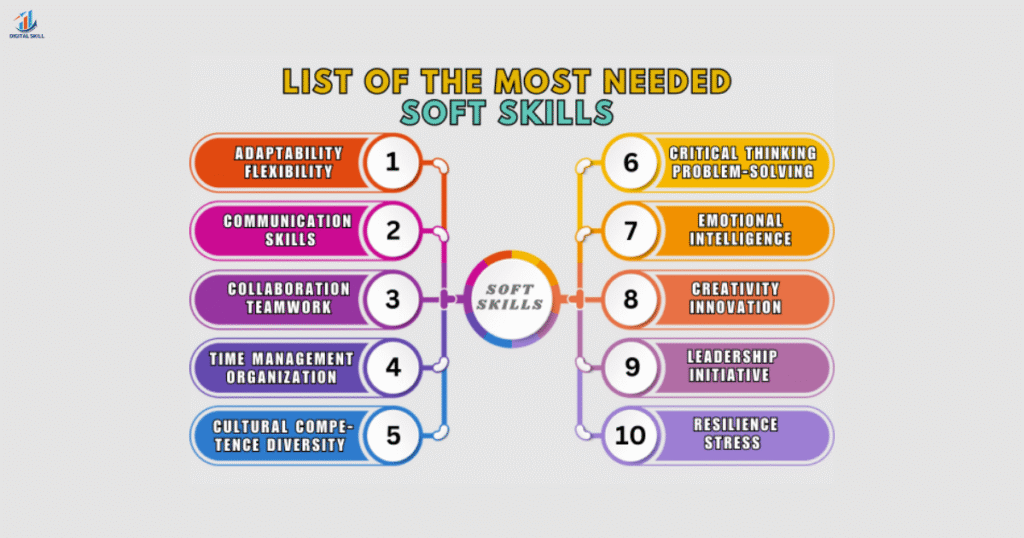
In today’s fast-paced world, soft skills are increasingly recognized as the foundation of effective communication and collaboration. It’s not just about Top Skills List but technical expertise; the ability to empathize, actively listen, and be attuned to social cues can set individuals apart in both personal and professional spheres. These skills foster strong relationships and facilitate teamwork, creating environments where creativity and innovation can flourish. Furthermore, soft skills are essential in navigating the complexities of a diverse workplace. As industries evolve, the demand for adaptability and interpersonal understanding will continue to grow, making soft skills a critical asset in an ever-changing job market.
- Communication Skills
- Leadership & Management
- Problem-Solving & Critical Thinking
- Emotional Intelligence
- Teamwork & Collaboration
- Adaptability & Flexibility – adjusting to change efficiently.
- Creativity & Innovation – thinking outside the box.
- Active Listening Skills – understanding and responding effectively.
- Time Management – prioritizing tasks and meeting deadlines.
- Negotiation Skills – achieving win-win solutions.
Hard/Technical Skills
Hard skills are tangible, teachable abilities that set professionals apart in a competitive job market. Unlike soft skills, which revolve around interpersonal dynamics, hard skills involve specific knowledge and expertise in areas such as programming languages, data analysis, or advanced mathematics. Mastery of these skills can lead to unique job opportunities and career advancement, as they often align with industry demands. For example, with the rise of artificial intelligence, proficiency in machine learning and data manipulation has become a highly sought-after asset.
- Data Analysis & Interpretation – Excel, SQL, Tableau, Power BI.
- Digital Marketing Skills – SEO, social media, and content creation.
- Programming & Coding – Python, Java, or relevant languages.
- Project Management – planning, execution, and tracking (Asana, Trello, Jira).
- Cloud Computing – AWS, Google Cloud, Microsoft Azure.
- Cybersecurity Basics – protecting digital assets and networks.
- Financial & Accounting Skills – QuickBooks, SAP, bookkeeping.
- Sales & Business Development Skills – CRM tools and lead generation.
- UX/UI Design & Web Development – building user-friendly interfaces.
- AI & Machine Learning Basics – understanding automation and predictive analytics.
Hybrid Skills
Hybrid skills are becoming a cornerstone of modern job markets, creating well-rounded professionals who combine technical expertise with interpersonal skills. As industries evolve, the demand for individuals who can navigate both digital landscapes and human dynamics increases. Think of a data analyst who not only crunches numbers but also presents results in compelling narratives. This intersection is where the magic happens.
- Research & Analytical Thinking – market trends and competitive analysis.
- Presentation & Public Speaking – pitching ideas and influencing decisions.
- Multilingual Skills – communicating in multiple languages.
- Networking & Relationship Building – building professional connections.
- Personal Branding & Online Presence – LinkedIn and professional profile optimization.
Section 2:Skills on Resumes and LinkedIn
When considering how to showcase top skills on resumes and CVs effectively, think beyond just lists. For example, instead of saying “managed a team,” demonstrate impact by saying, “led a team of 10 people to increase project performance by 25% within six months.” This approach not only highlights your skills but also provides tangible evidence of your contribution. Enhancing LinkedIn profiles with key essential skills to increase visibility in today’s competitive job market. Strategically incorporating industry-relevant keywords can significantly improve your chances of being discovered by recruiters. LinkedIn features, such as actively engaging with endorsements and recommendations, further solidify your expertise, making it easier for potential employers to recognize your abilities at a glance.
Section 3: Mastering Advanced Skills
Mastering advanced skills requires continuous learning and a commitment to staying current with industry trends. Engaging in online courses and earning certifications can provide structured information and prepare you for real-world applications. However, it is crucial to supplement this learning with practical projects that allow you to apply what you have learned in concrete ways. Mentoring and networking play a critical role in skill improvement. Engaging with peers through discussions, workshops, or collaborative projects fosters a culture of learning, innovation, and creativity. By immersing yourself in a community of passionate learners, you can benefit from shared knowledge and resources, which often lead to new opportunities and successes on your journey to mastery.
Conclusion
Here we have given you a Top Skills List to win a big chance. The future job market will reward professionals who continuously upgrade their capabilities. Mastering digital, technical, and people skills can significantly increase your earning potential and employability. Focus on learning, adapting to new technologies, and building real-world expertise. The right skill set today can open premium opportunities tomorrow.
FAQs
1. What are the most in-demand skills for high-paying jobs in 2026?
Digital skills, AI & data skills, cybersecurity, communication, leadership, problem-solving, and advanced IT skills will be highly in demand.
2. Why is it important to develop top skills for the future?
Developing future-ready skills helps you compete in the job market, secure high salaries, and stay relevant as industries transform with technology.
3. Can soft skills also help in getting high-paying jobs?
Yes, employers value teamwork, leadership, emotional intelligence, communication, and adaptability as much as technical expertise.
4. How can I improve the top skills needed for high-paying jobs?
Take online courses, gain certifications, practice real projects, follow industry trends, and continuously upskill to stay ahead.