Master the most in-demand or Top Soft Skills for 2026. Discover 75 powerful abilities that boost employability, performance, and career success.
Section 1: Top 75 Soft Skills for 2026
Category 1: Communication Skills (15 Skills)
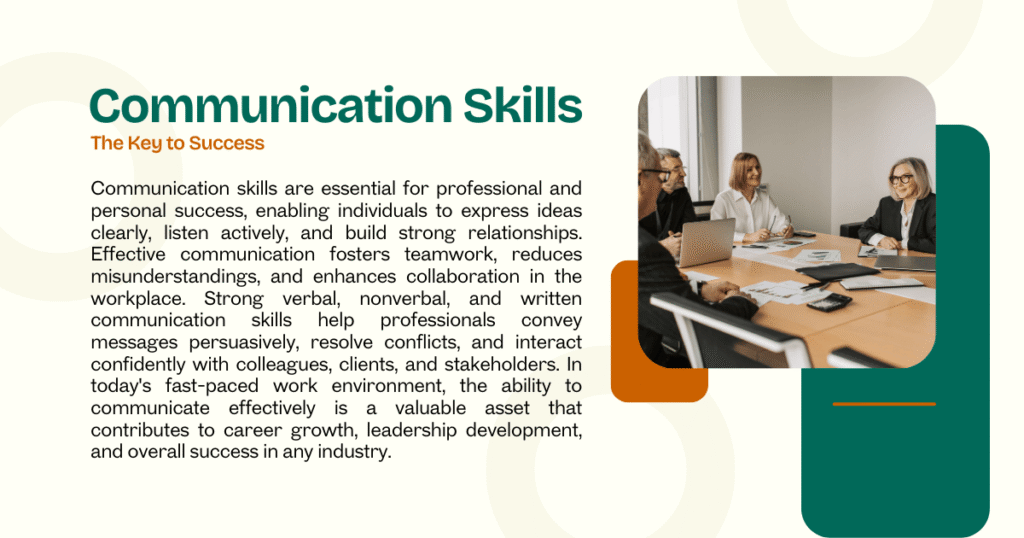
Effective communication goes beyond just words. It encompasses a rich tapestry of skills that can transform conversations and deepen relationships. Active listening stands as a cornerstone, allowing individuals not only to hear but also truly understand and engage with the speaker’s message. This skill fosters empathy, creating a safe space for open dialogue and collaboration. Combined with the art of nonverbal communication, where body language, eye contact, and facial expressions convey as much as spoken language, individuals can significantly enhance their message and its reception.
- Verbal Communication 2.Non-Verbal Communication 3. Active Listening
4. Empathy 5.Clarity and Concise 6. Confidence
7. Persuasion and Influence 8. Emotional Intelligence 9. Feedback Skills
10 . Public Speaking 11 . Written Communication 12. Interpersonal Communication
13Adaptability 14. Questioning Skills 15. Conflict Resolution
Category 2: Leadership & Management Skills (15 Skills)
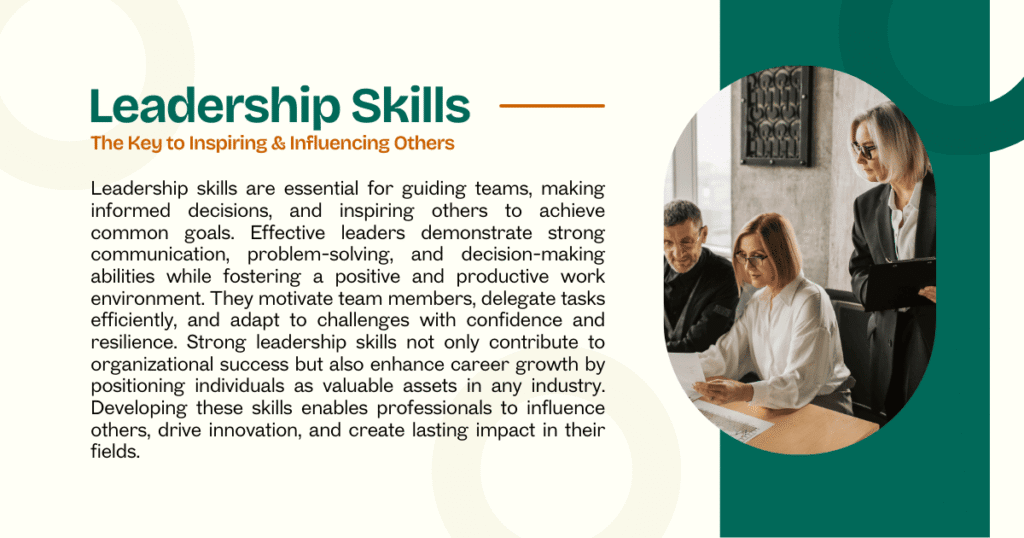
Leadership and management skills are intertwined to build effective teams and promote organizational success. While leadership often emphasizes vision and inspiration, management focuses on the intricate details of execution and resource allocation. A leader’s ability to cultivate emotional intelligence is crucial, as it enables them to connect with team members on a personal level, fostering trust and cooperation. This bond transforms a diverse group of individuals into a cohesive unit, where appreciation of different perspectives can lead to innovative problem-solving.
- Strategic Thinking
- Decision-Making
- Problem-Solving
- Team Building
- Delegation
- Communication Skills
- Emotional Intelligence
- Conflict Management
- Time Management
- Coaching & Mentoring
- Motivational Skills
- Change Management
- Performance Management
- Adaptability
- Accountability & Responsibility
Category 3: Cognitive & Analytical Skills (15 Skills)
Cognitive and analytical skills are the foundation of effective problem-solving and decision-making in our increasingly complex world. At their core, cognitive skills encompass the mental processes that allow us to acquire knowledge, understand ideas, and retain information. These skills enable individuals to navigate vast amounts of data, discerning what is valuable and what is redundant. In an information-rich landscape, honing these skills is like honing a compass that guides us through intellectual chaos. In contrast, analytical skills and digital skills empower us to dissect and interpret data, often revealing connections and patterns hidden beneath the surface.
- Critical Thinking
- Analytical Reasoning
- Problem-Solving
- Logical Thinking
- Decision-Making
- Data Interpretation
- Observation Skills
- Attention to Detail
- Creative Thinking
- Information Processing
- Research & Inquiry Skills
- Pattern Recognition
- Numerical Reasoning
- Strategic Thinking
- Evaluation & Judgment
Category 4: Emotional Intelligence & Personal Skills (15 Skills)
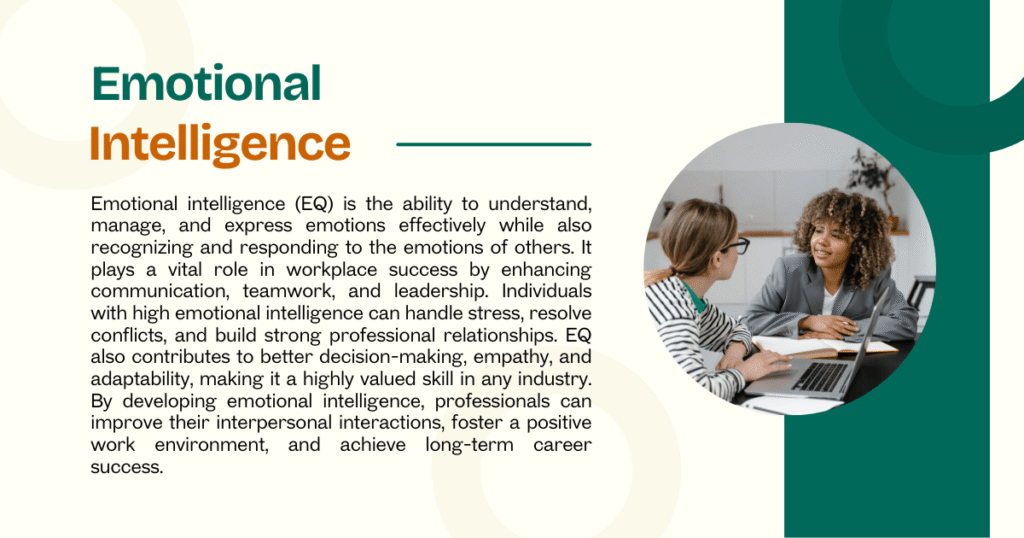
Emotional intelligence (EI) is more than just a buzzword. It’s a suite of effective personal skills that can transform both professional and personal relationships. Unlike technical skills that can diminish over time without practice, emotional intelligence is developed with self-awareness and intention. By being in tune with our own emotions and the emotions of others, we can navigate even the most difficult social situations with grace. This sensitivity fosters empathy, which allows us to connect on a deeper level, whether in a boardroom debate or a casual conversation.
- Self-Awareness
- Self-Management
- Emotional Regulation
- Empathy
- Self-Motivation
- Resilience
- Stress Management
- Confidence
- Adaptability
- Positive Attitude
- Self-Discipline
- Mindfulness
- Patience
- Self-Reflection
- Personal Accountability
Category 5: Collaboration & Interpersonal Skills (15 Skills)
Collaboration thrives on a delicate balance of diverse perspectives, where each team member’s unique perspectives can spark innovation. Embracing this diversity isn’t just about acknowledging differences. It’s about turning potential friction into harmony. Practicing active listening, for example, can lead to deeper understanding and unexpected solutions, creating an environment where every voice is valued and empowered. Interpersonal skills play a critical role in this dynamic. Emotional intelligence becomes the true currency of collaboration, enabling individuals to navigate stress and foster trust. The ability to empathize with teammates not only strengthens relationships but also fosters collective motivation and commitment.
- Teamwork
- Cooperation
- Relationship Building
- Active Listening
- Empathy
- Communication
- Conflict Resolution
- Negotiation
- Trust-Building
- Respectfulness
- Cultural Awareness
- Supportiveness
- Collaboration
- Networking
- Interpersonal Adaptability
Section 2: How to Showcase Soft Skills on Resume & LinkedIn
Showing off your soft skills on your resume and LinkedIn is essential in a competitive job market. An effective tip for listing soft skills is to tie them into your experience description rather than listing them separately. For example, instead of just saying “team player,” make it clear with a phrase like, “Collaborated with a diverse team to develop a product that increased customer engagement by 25%.” This paints a clear picture of your abilities in action, providing concrete achievements that resonate with recruiters.
Section 3: How to Develop Soft Skills
A versatile approach to developing soft skills relies on integrating methods that enhance communication, leadership, and emotional intelligence. Engaging in online courses can provide foundational knowledge, while workshops offer real-time practice and peer feedback. This immersive learning experience transforms concepts into actionable skills, allowing individuals to confidently address interpersonal challenges. Relationship mentoring can further enrich this learning journey, offering personalized guidance and insight for navigating complex social dynamics. Through continuous learning and self-assessment, you can identify strengths and areas for improvement, creating a customized development plan.
Section 4: Soft Skills Employers Look for in 2026
As we enter 2026, soft skills are emerging as a key asset in the job market, especially in light of trends and insights from recruiters and HR professionals. Communication is a foundation, but the emphasis is shifting from simply conveying information to active listening and constructive feedback. As AI tools take over repetitive tasks, professionals who invest in creative problem-solving and critical thinking will have a distinct advantage. Employers are not just looking for candidates who can get things done, but also those who can anticipate challenges and inspire teams.
Conclusion
Top Soft Skills are the real career power boosters in 2026. They help you communicate better, lead confidently, solve problems, and work effectively with teams. Whether you’re a student, job seeker, or professional, strengthening Soft Skills opens doors to better opportunities and higher success. Start developing your Soft Skills today to stay competitive and future-ready.
FAQs
1. What are Soft Skills and why are they important?
Soft Skills are personality traits like communication, leadership, teamwork, and adaptability. They help you succeed in any job and workplace.
2. Which Soft Skills are most in demand for jobs in 2026?
Top Soft Skills include communication, problem-solving, emotional intelligence, teamwork, adaptability, leadership, creativity, and time management.
3. How can I improve my Soft Skills?
Practice daily communication, take online courses, participate in group activities, seek feedback, and work on real-life professional situations.
4. Are Soft Skills more important than technical skills?
Both are important, but Soft Skills often decide promotions, hiring decisions, teamwork success, and leadership growth because they influence how you work with others.