Hard skills List for students: Discover 80 powerful, in-demand hard skills that employers want most. Enhance your career, boost your employability, and secure high-paying jobs.
📌 Hard skills List for students/freelancers/jobs
Meaning:
Hard skills are specific, teachable abilities that can be learned through study, training, or practice. They are measurable and directly related to a job or task.
Examples & Explanation:
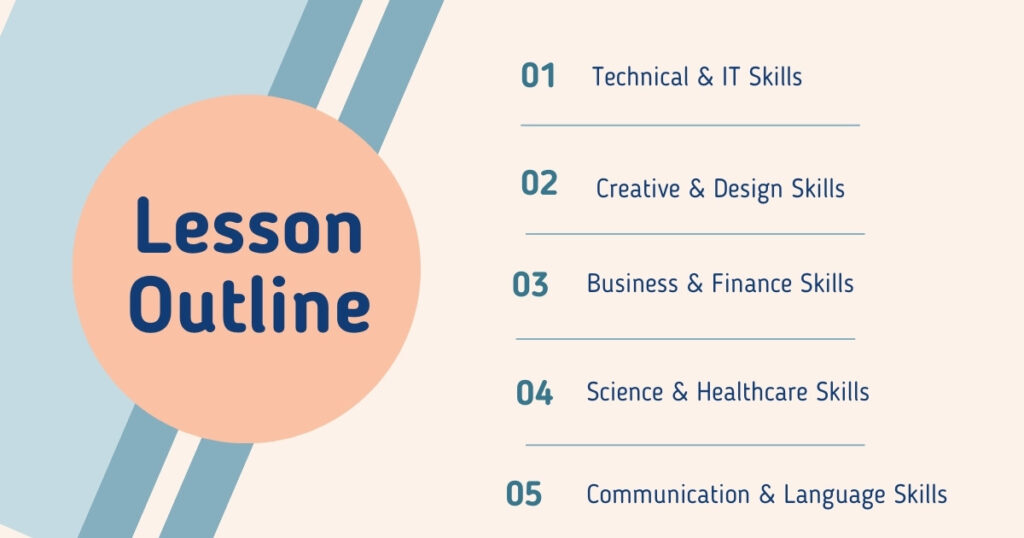
- Technical & IT Skills (20 Skills)
- Creative & Design Skills (15 Skills)
- Business & Finance Skills (15 Skills)
- Science & Healthcare Skills (15 Skills)
- Communication & Language Skills (15 Skills)
Section 1:
80 Powerful Hard Skills List for Students/freelancers/jobs Examplesby Category
1️⃣: Technical & IT Skills (20 Skills)💻⚙️🖥️🔐🤖📡
In today’s rapidly evolving digital landscape, technical and IT skills are more than just a résumé boost; they are essential for navigating the complexities of modern business environments. The surge in remote work has catalyzed a profound demand not only for traditional IT competencies but also for adaptable skill sets that encompass cloud computing, cybersecurity, and data analytics. As organizations increasingly rely on technology to drive efficiency, professionals equipped with versatile skills can pivot swiftly, meeting the challenges presented by emerging technologies.
- Web Development
- Software Development
- Database Management
- Networking
- Cybersecurity
- Cloud Computing
- System Administration
- Data Analysis
- Data Science
- Artificial Intelligence & Machine Learning
- DevOps
- Mobile App Development
- IT Support & Troubleshooting
- Hardware Managemen
- Automation & Scripting
- UI/UX Design
- Big Data Management
- ERP/CRM Management
- IoT (Internet of Things) Skills
2️⃣: Creative & Design Skills (15 Skills)🎨✨🖌️🖼️🎥🎭
Creative and design skills are more than just artistic expressions; they are powerful tools that can transform ideas into tangible realities. In an era where visual communication dominates, the ability to create compelling designs is invaluable. Think beyond traditional art forms; today’s creatives harness digital technology, blending graphics, video, and interactive elements to engage diverse audiences. This multidisciplinary approach not only enhances aesthetic appeal but also deepens emotional connections with viewers.
- Graphic Design
- UI/UX Design
- Visual Communication
- Creative Thinking
- Illustration
- Branding
- Motion Graphics
- Video Editing
- Photography
- Animation
- Content Creation
- Design Thinking
- Storytelling
- Layout & Typography
- Product Design
3️⃣: Business & Finance Skills (15 Skills)💼📈📊💰🏦🧾
In today’s complex economic landscape, mastering business and finance skills is not just advantageous; it’s essential for navigating uncertainty. The ability to synthesize financial data and derive actionable insights can set apart successful leaders from their peers. For instance, understanding the principles of behavioral finance can enhance decision-making by revealing how psychological factors impact investor behavior. This knowledge not only allows professionals to predict market trends but also equips them to mitigate risks more effectively.
- Financial Literacy
- Budgeting
- Financial Analysis
- Accounting Basics
- Investment Knowledge
- Risk Management
- Business Strategy
- Entrepreneurship
- Market Analysis
- Negotiation
- Project Management
- Cost Management
- Business Planning
- Sales & Revenue Management
- Data-Driven Decision Making
4️⃣: Science & Healthcare Skills (15 Skills)🧬🔬🏥🩺🧪⚕️
In the rapidly evolving landscape of healthcare, the fusion of science and practical skills is more essential than ever. Beyond the foundational knowledge of biology and chemistry, healthcare professionals are now expected to master data analytics and technological tools that can improve patient outcomes. This shift not only enhances diagnostics but also empowers providers to make evidence-based decisions swiftly, adapting to the dynamic needs of patients in real-time.
- Scientific Research Skills
- Laboratory Skills
- Data Analysis
- Observation & Measurement
- Critical Thinking
- Clinical Care Basics
- Patient Care & Empathy
- Medical Terminology Knowledge
- Diagnostic Reasoning
- Health & Safety Compliance
- Public Health Awareness
- Biotechnology Basics
- Evidence-Based Practice
- Record Keeping & Documentation
- Problem-Solving Skills
5️⃣: Communication & Language Skills (15 Skills)🗣️📝📢📚🌎💬
Effective communication transcends mere words; it encompasses the nuances of tone, body language, and even silence. Engaging in meaningful conversations requires not just articulating thoughts clearly, but also mastering the art of active listening. This often overlooked skill fosters deeper connections, allowing us to understand not just what is being said but the emotions and intentions behind the words. When individuals feel heard, their willingness to share increases, creating a richer dialogue that can lead to innovative ideas and solutions.
- Verbal Communication
- Written Communication
- Public Speaking
- Active Listening
- Non-Verbal Communication
- Presentation Skills
- Persuasion
- Storytelling
- Interpersonal Communication
- Cross-Cultural Communication
- Multilingual Ability
- Grammar & Vocabulary Skills
- Reading Comprehension
- Editing & Proofreading
- Email & Professional Communication
Section 2: How to Learn and Improve Hard Skills
Engaging in online courses and certifications through platforms like Coursera, Udemy, and LinkedIn Learning can be a game-changer in developing your hard skills. By focusing on the latest trends and technologies, you can ensure that your skills remain relevant in the fast-paced job market. However, engaging in workshops, bootcamps, and industry-specific training can provide immersive experiences that theory-based learning cannot. Finally, ongoing skill assessments and updates are crucial. Regularly reviewing your skill set and getting feedback can highlight areas for improvement, ensuring that you remain competitive. Adopt a lifelong learning mindset, as the skills landscape is always evolving, and those who adapt and grow will always have the upper hand in their careers.
Section 3: Hard Skills Employers Look for in 2026
In 2025, employers will prioritize hard skills that align with rapidly evolving technology and market demands. The most in-demand skills by industry and region will include advanced data analytics and artificial intelligence skills, with companies looking for candidates who can leverage big data for strategic decision-making. For students and new entrants, mastering machine learning and cloud computing will not only open doors but also guarantee higher salaries and better job prospects in sectors undergoing significant digital evolution.
Conclusion
Building a strong Hard skills List for students is one of the smartest ways to stay competitive, relevant, and employable in today’s fast-changing job market. Whether you’re entering the workforce, upgrading your career, or preparing for high-paying opportunities, mastering technical, digital, analytical, and professional hard skills gives you a powerful advantage. Focus on continuous learning, practice real-world application, and stay updated with market demands because the right hard skills don’t just help you get hired; they help you grow, lead, and succeed.
FAQs
1. What are hard skills and why are they important?
Hard skills are teachable, measurable abilities like coding, data analysis, design, accounting, and IT. They are important because employers use them to determine job competence.
2. Which hard skills are most in demand today?
The most in-demand hard skills include digital marketing, coding, AI & data analytics, cybersecurity, project management, business intelligence, and financial analysis.
3. How can I develop the hard skills employers want?
You can develop hard skills through online courses, certifications, hands-on training, internships, professional projects, and continuous self-learning.
4. Do hard skills really help you get high-paying jobs?
Yes, strong hard skills significantly increase hiring chances, earning potential, promotions, and career stability because companies prioritize skill-based talent.