Unlock success in the digital age with Essential Digital Skills master 7 core competencies to excel in careers, innovation, and technology.
Essential Digital Skills Definition?
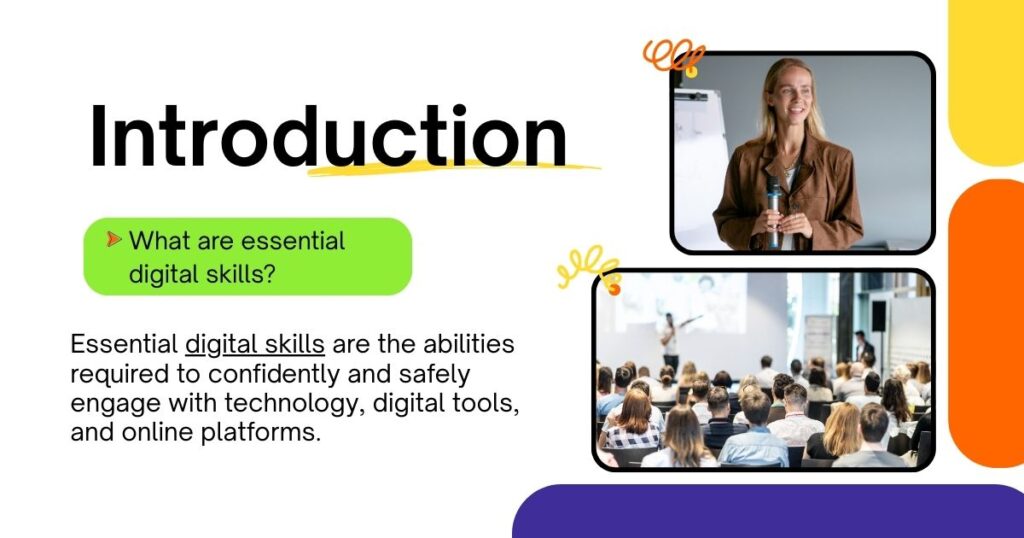
Essential digital skills are the abilities required to confidently and safely engage with technology, digital tools, and online platforms. They enable individuals to use computers, mobile devices, and internet services efficiently, whether for learning, working, shopping, or connecting socially.
Essential Digital Skills and 7 Core Competencies for Success are described below
1. Digital Literacy and Online Communication
Digital literacy is the foundation of all other digital skills. It’s the ability to navigate, evaluate, and communicate effectively using digital platforms. This includes:
- Proficiency in email, chat tools, and video conferencing
- Understanding online etiquette and professional communication
- Using cloud tools like Google Workspace or Microsoft 365
Why it matters: Digital literacy ensures you can collaborate efficiently and maintain professionalism in online environments.
2. Data Analysis and Interpretation
Data is the new currency of the digital age. Understanding how to collect, analyze, and interpret data is critical for decision-making. Skills in this area include:
- Excel, Google Sheets, and database tools
- Data visualization tools like Tableau, Power BI, or Google Data Studio
- Basic understanding of statistics and trend analysis
Why it matters: Businesses rely on data to make informed decisions. Professionals with data analysis skills are highly valued.
3. Digital Marketing and Social Media Management
Digital marketing skills enable you to promote brands, products, or services online effectively. Key areas include:
- Search Engine Optimization (SEO) and Search Engine Marketing (SEM)
- Social media management (Facebook, LinkedIn, Instagram, TikTok)
- Email marketing, content creation, and analytics
Why it matters: Digital marketing skills drive brand visibility, sales, and customer engagement, making them essential for businesses and freelancers alike.
4. Cybersecurity Awareness
As more business operations move online, understanding cybersecurity basics is essential. Key skills include:
- Recognizing phishing and malware threats
- Using secure passwords and multi-factor authentication
- Understanding data privacy regulations (GDPR, CCPA)
Why it matters: Cybersecurity knowledge protects personal and organizational data, preventing financial and reputational loss.
5. Coding and Programming Basics
While not everyone needs to be a full-time developer, having a basic understanding of coding enhances problem-solving and technical comprehension. Useful languages and skills include:
- HTML, CSS, and JavaScript for web basics
- Python for data analysis and automation
- Understanding APIs and software logic
Why it matters: Coding skills increase employability, enable automation, and help collaborate effectively with tech teams.
Five Core Areas of the Essential Digital Skills Framework
The EDSF identifies five core skill areas, each focusing on practical, everyday digital activities. Let’s explore how these categories work together to build a solid digital foundation.
| Core Area | Description | Example Activities |
| 1. Communicating | Sharing information and collaborating digitally | Sending emails, using social media, video conferencing |
| 2. Handling Information | Searching, evaluating, and managing digital content | Research, data storage, using cloud tools |
| 3. Transacting | Engaging in online transactions safely | Online shopping, banking, using payment platforms |
| 4. Problem Solving | Applying digital tools to complete tasks or solve issues | Using Excel, AI tools, or apps for productivity |
| 5. Being Safe Online | Protecting privacy and acting responsibly online | Password management, privacy settings, cybersecurity awareness |
1. Communicating Online Effectively
Digital communication is the cornerstone of modern interaction. It includes sending emails, video conferencing, collaborating through platforms like Slack or Teams, and maintaining professionalism in digital spaces.
To master this skill:
- Use clear, concise language online.
- Manage your digital identity and reputation.
- Respect cultural differences in global communication.
- Leverage tools like Zoom, Microsoft Teams, and Google Meet for collaboration.
Strong communication skills ensure messages are delivered effectively and respectfully, building trust in virtual environments.
2. Handling Information and Content
In an era of information overload, the ability to find, evaluate, and organize digital information is crucial.
Key practices include:
- Using search operators and filters for better results.
- Fact-checking and verifying sources.
- Storing data securely in cloud environments like Google Drive or OneDrive.
- Avoiding misinformation by evaluating credibility.
Effective information handling helps learners and professionals stay informed and make data-driven decisions.
3. Transacting Securely Online
Online transactions from banking to shopping require awareness and security.
Individuals should be able to:
- Recognize secure websites (HTTPS and padlock icons).
- Use two-factor authentication (2FA).
- Avoid phishing and scam emails.
- Keep financial details private.
4. Problem Solving with Digital Tools
Problem-solving involves using technology to overcome challenges or improve efficiency.
Examples include:
- Automating tasks using spreadsheets or AI tools.
- Troubleshooting software or connectivity issues.
- Learning through online tutorials or forums.
This skill demonstrates adaptability and critical thinking, both highly valued in modern workplaces.
5. Being Safe, Responsible, and Legal Online
Digital safety goes beyond avoiding viruses; it’s about acting ethically and responsibly.
- Understand data privacy laws like GDPR.
- Report and avoid online harassment.
- Use secure networks and antivirus protection.
- Practice digital well-being by managing screen time.
Real-World Applications of the Essential Digital Skills Framework
| Sector | Application |
| Healthcare | Using electronic health records, telemedicine, and secure patient data systems |
| Education | Online teaching, digital assessments, virtual classrooms |
| Business | E-commerce operations, cloud collaboration, customer management |
| Government | Digital service delivery and cybersecurity management |
Top Tools and Resources to Build Digital Skills
- Google Digital Garage – Free digital marketing and career courses
- LinkedIn Learning – Professional skill-building videos
- Coursera & edX – Certified courses from global universities
- ICDL / ECDL Certification – Globally recognized digital competency program
- FutureLearn – Beginner-friendly tech and literacy courses
FAQs
1. What is the Essential Digital Skills Framework?
It’s a government-backed framework defining the digital skills needed to live, learn, and work effectively in the modern world.
2. Who should learn essential digital skills?
Everyone from students to professionals benefits from digital literacy in daily and professional life.
3. Is digital literacy the same as computer literacy?
Not exactly. Computer literacy focuses on operating devices, while digital literacy covers safe, ethical, and effective online behavior.
4. Are essential digital skills required for all jobs?
Yes. Nearly all modern jobs involve digital tools, communication, or data handling.
5. How can I test my digital skills level?
You can use free assessments like the Essential Digital Skills Assessment from the UK’s gov.uk or online learning platforms.
6. What certifications prove digital competency?
Certifications like ICDL, Google Digital Skills, and Microsoft Digital Literacy validate your expertise.
Conclusion:
The Essential Digital Skills Framework is more than a checklist; it’s a roadmap for digital empowerment. Whether you’re a student, teacher, entrepreneur, or employee, mastering these skills ensures you remain competitive, confident, and connected in the digital age.
Are you interested in mastering digital skills for career success